
Do You Have a Micro-climate? Plus a Book Alert
Not all gardening books are created equal or in the same way.

We’re covering two topics in this newsletter, so bear with me and prepare to shift gears.
First, the blooming continues. Despite several frosts and freezes, I still have a begonia blooming outdoors. Why? There’s a micro-climate on my front stoop that has kept it toasty enough for the begonia to thrive into November.
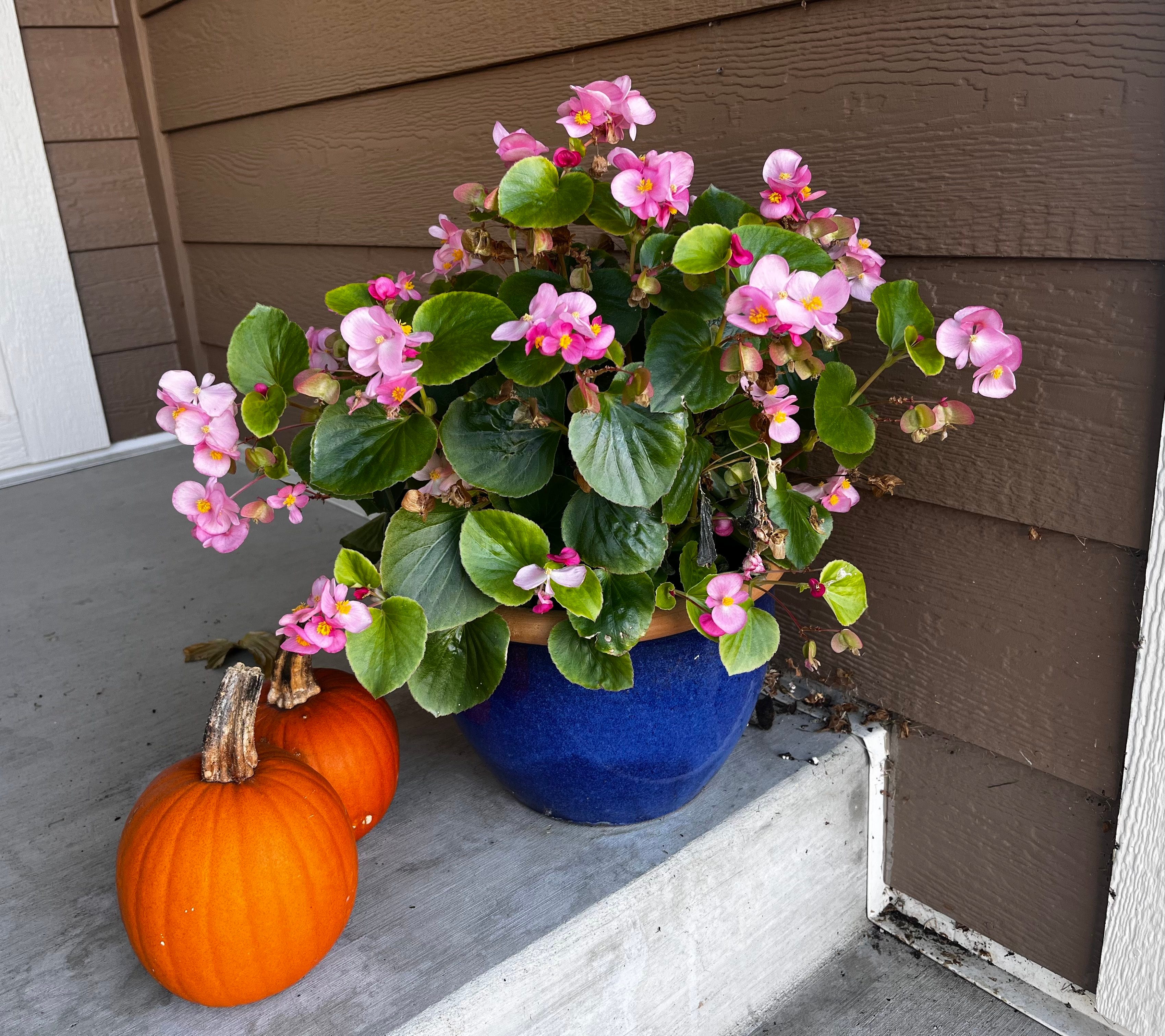
What is a micro-climate?
A micro-climate is a small area of your garden that varies slightly in temperature or conditions from the rest of your property. The variation is enough to grow plants that may not grow well elsewhere in the garden. Your micro-climate may be warm, cold, damp, shady or protected. Knowing your garden’s micro-climates helps you to choose the best plants for each area.
A warm micro-climate, such as the one on my stoop, is often caused by buildings, sidewalks, driveways, retaining walls and other built-features that attract and retain heat. Cool micro-climates come in lower-lying areas or those that are shady. You may have a wet micro-climate where the water flows through your property or a more humid micro-climate near a pond or lake. A row of trees may provide a windbreak that gives delicate plants a less harsh place to grow. Even snow piles can induce a micro-climate. Places where snow piles up, either naturally or from shoveling, can give plants better insulation from cold and prevent early blooming during unseasonably warm spring days.
Warmer micro-climates can give plants a few extra days or weeks of growth. A warm micro-climate might be a good place to put a more tender plant or one that pushes the zone you are in. Colder micro-climates can control for things like early budding on trees. Fruit farmers often choose to plant stone fruits, such as cherries, in slightly cooler areas to prevent them from blooming early and being nipped by a late frost.
Late fall is a good time to observe your garden to find those areas that are slightly different from the rest—places where plants are still looking good or where they wilted rapidly in frost—and make plans for how you will take advantage of the heat or cool over time.
A Warning for Book Buyers
In the past few months, I’ve noticed a dramatic increase in the number of gardening books generated by artificial intelligence (or as one of my fellow garden communicators calls it, artificial information). The creators of these books harvest information from internet sources and repackage it to generate maximum sales at minimum cost. Reviews of the books often mention the repetitious nature of the writing, the lack of editing and factual errors.
Why do I bring this up? The holiday season is a time when many people buy gardening books for themselves or their loved ones. If you do so, please buy a book from a real author – there are so many good ones! You can find those books online but also in local bookstores.
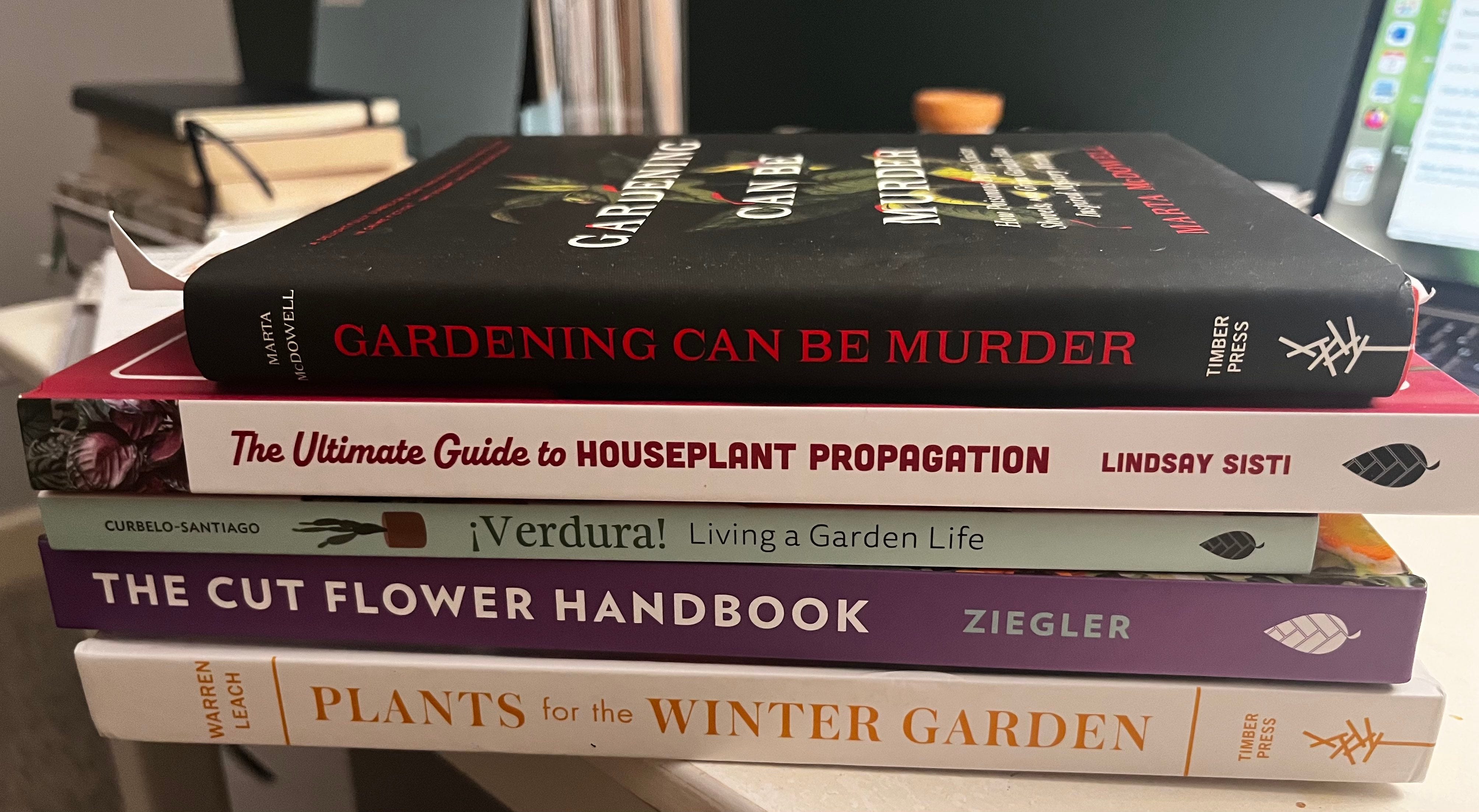
Here’s a quick way to check if the book is real or AI: Search the author’s name. Real authors have websites or Substack newsletters or Instagram accounts. There is usually a picture of the author. AI “authors” tend not to have a personal web presence. They also tend to have written more titles than a real human could. Last week, I discovered an AI author who had published 27 books about gardening, agriculture, food and green living in 2024 alone!
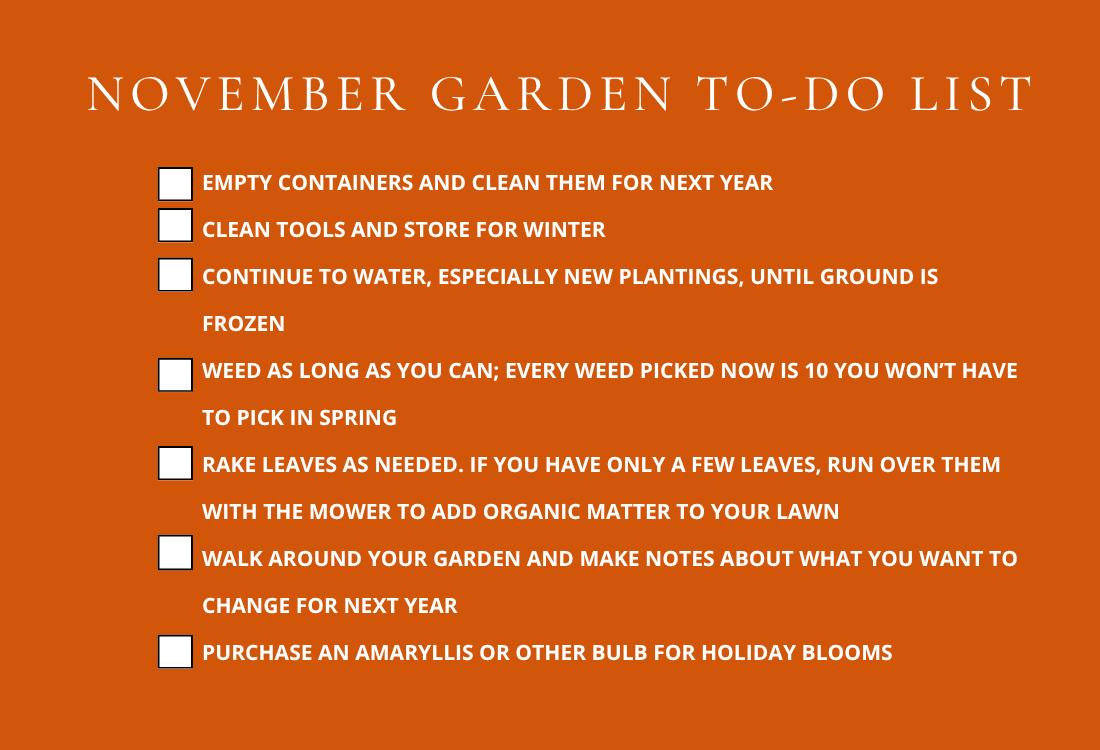
November in the Garden
November is a good time to contemplate your garden and dream about what you will do next year.
A Few Links
How to Save Your Amaryllis for Next Year – Yes, an amaryllis can be saved from year to year.
A book for the future – Gardeners live long lives – that’s the good news! But we still get older and sometimes that means making adjustments. My garden writing colleague and fellow Minnesotan, Rhonda Fleming Hayes, has a new book coming out on gardening as you age. I was one of several experienced gardeners that Rhonda interviewed for the book. It won’t be available until April, but you can pre-order now.
New article on pruning – The Winter 2025 issue of Northern Gardener magazine includes my article on pruning basics. Pruning is one of those garden skills everyone should have.
Happy Thanksgiving!
I’m very grateful for each and every one of you. Wishing you a warm and cheerful November and a beautiful Thanksgiving.
AI is worse than creeping bellflower.
Sincerely, a real live author.
Thanks for the shout out! And the warning.